
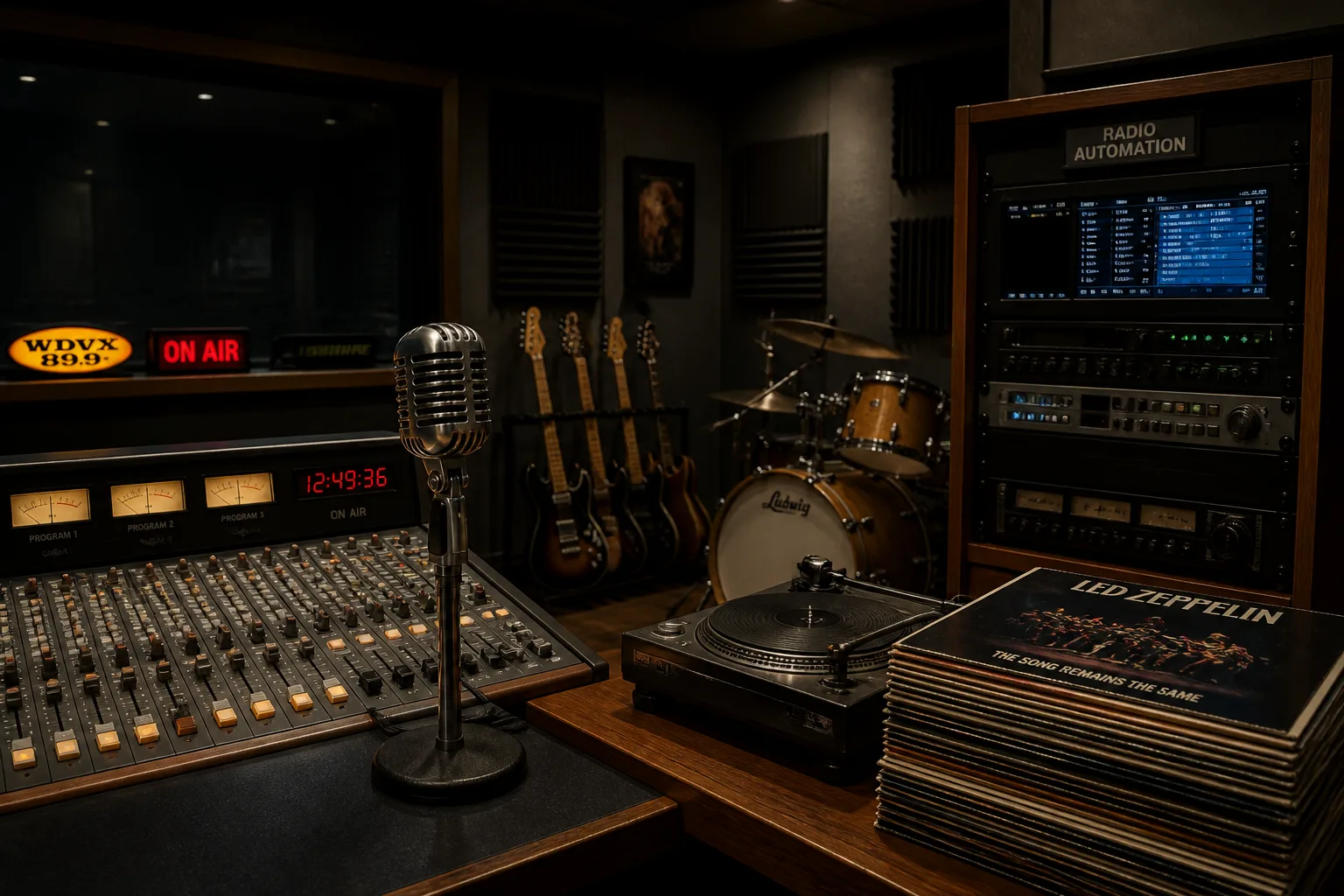
KCAL-FM 96.7 Loses Entire Staff as It Switches to Automated Classic-Rock Format
The Inland Empire’s longtime classic‑rock voice will silence its on‑air talent this weekend as KCAL‑FM 96.7 drops its human hosts for a fully automated playlist.
On July 31, the station announced that beginning Saturday, Aug. 1, 2026, it would become a music‑only operation. The move followed the dismissal of every on‑air employee the previous Friday.
KCAL‑FM, which signed on in 1965, has long been the region’s “Rock Station.” The station adopted a rock format in 1969 and later branded itself “The Rock Spectrum,” playing soft rock during the day and harder rock at night. Its transition to automation marks the end of an era for listeners who have tuned in for decades.
The station’s Facebook post on July 31 stated the new format would be “All Music, All the Time,” with fewer interruptions and a focus on classic‑rock songs that have defined its heritage. The post also said the change would “build on the station’s strong rock heritage” and offer a “focused, consistent listening experience with broader appeal for both our audience and advertising partners.”
Former hosts confirmed the layoffs on social media. Evening host John DeSantis posted that the station would be moving to a human‑less format and that all staff had been let go. Afternoon host Daryl Norsell, who had worked at KCAL for 42 years, shared a Facebook note of gratitude and said his four‑hour studio shift had been a highlight of his day. Morning host Patrick Tish posted on Instagram that his 15‑year run at the station had ended.
Anaheim Broadcasting Corporation, KCAL‑FM’s owner, did not respond to a request for comment. A news release from Southern California News Group quoted Kelly Sanders, chief operating officer of Anaheim Broadcasting, saying the station’s new format would “expand the station’s musical focus” and “have fewer interruptions and more music throughout the day.” Sanders also noted that the change would “build on the station’s strong rock heritage.”
The shift comes amid a slide in KCAL‑FM’s ratings. A recent Nielsen Audio report shows the station’s market share rose from 2.0 to 2.9 in June 2026, but it still faces stiff competition from Meruelo Media’s 95.5 KLOS in Los Angeles, which also targets classic‑rock listeners. Automation is intended to streamline programming and reduce operating costs.
KCAL‑FM’s move is part of a broader industry trend, as many stations rely on computer‑driven playlists to cut staffing expenses. While the change may appeal to listeners who prefer uninterrupted music, it also eliminates the local personalities that have long been a key part of KCAL‑FM’s identity.
At present, the station broadcasts a continuous stream of classic‑rock tracks without live hosts. No further programming strategy has been announced. Listeners who previously tuned in for the station’s on‑air talent can now expect a music‑only schedule that follows the classic‑rock format the station has championed for decades.
The Inland Empire’s radio landscape will now include an automated classic‑rock station that no longer features local DJs—a change that reflects both economic pressures and evolving listener habits in the region.