
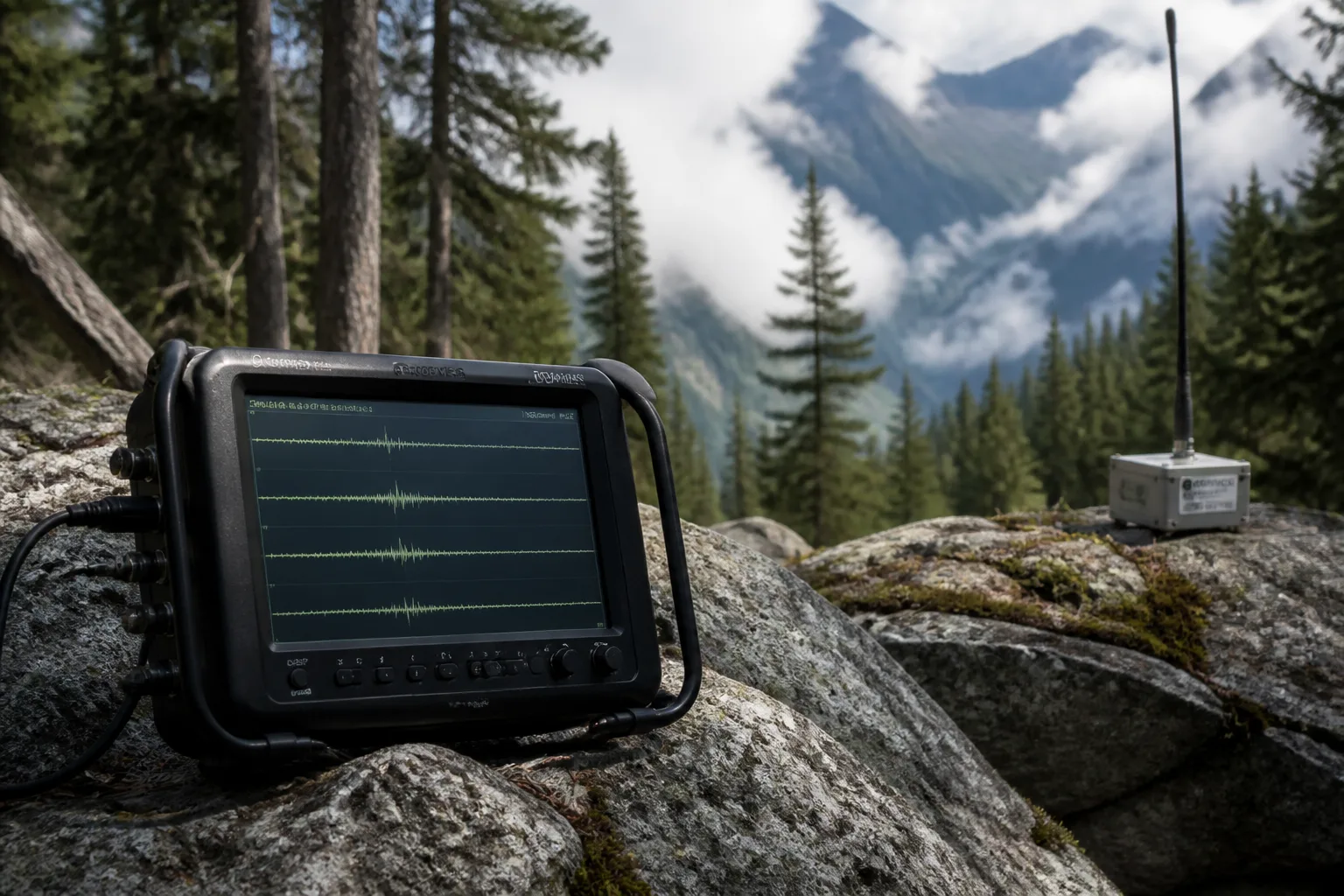
Northern California Sees Back-to-Back 4.1 and 4.5 Magnitude Earthquakes Near Covelo
When the sun dipped below the Mendocino horizon on Wednesday, August 5, 2026, two tremors rattled the quiet town of Covelo, sending a shiver through the surrounding Coast Ranges.
At 3:20 p.m. local time, the United States Geological Survey (USGS) logged a preliminary 4.1‑magnitude quake. A minute later, a slightly larger shock—preliminary 4.5—struck the same spot, creating a rapid succession of seismic activity.
Both events were centered roughly 19.3 miles northwest of Covelo, at latitude 40.027° N and longitude 123.444° W, and emerged from a shallow depth of about 7 km. The earthquakes lie roughly 210 miles north of San Francisco and 230 miles northwest of Sacramento.
The region has been rattling in recent weeks. A 4.0‑magnitude quake hit the Covelo area on Tuesday, August 4, and the USGS has recorded additional 4.4, 4.0, and 3.9‑magnitude shocks in the vicinity during the past month.
Residents in Covelo, southern Trinity County, and parts of southern Humboldt County reported feeling the tremors, but no injuries or structural damage have been reported.
Covelo sits at an elevation of 1,398 feet and had a population of 1,394 according to the 2020 census. The town lies within the Round Valley Indian Reservation and is surrounded by the California Coast Ranges. The area is part of the “Emerald Triangle,” a region known for its redwood forests, wine production, and cannabis cultivation.
The USGS monitors seismic activity across the United States and publishes preliminary magnitude estimates within minutes of an event. The agency’s data are used by emergency managers, scientists, and the public to assess potential impacts and to update hazard models.
Northern California is seismically active due to the complex interaction of the Pacific and North American tectonic plates. The region contains several active fault systems, including the Cascadia subduction zone to the north and the San Andreas fault system to the south. While the 4.1 and 4.5 magnitude quakes are moderate and unlikely to cause significant damage, they contribute to the ongoing assessment of seismic risk in the state.
No injuries, casualties, or damage have been reported as a result of the twin quakes. Local authorities have confirmed that the USGS is continuing to monitor the area for aftershocks and that the public should remain alert to any additional seismic activity.
The events underscore the importance of preparedness in California’s earthquake‑prone regions. Residents are encouraged to review their emergency plans, secure heavy furniture, and stay informed through official sources such as the USGS and state emergency management agencies.