
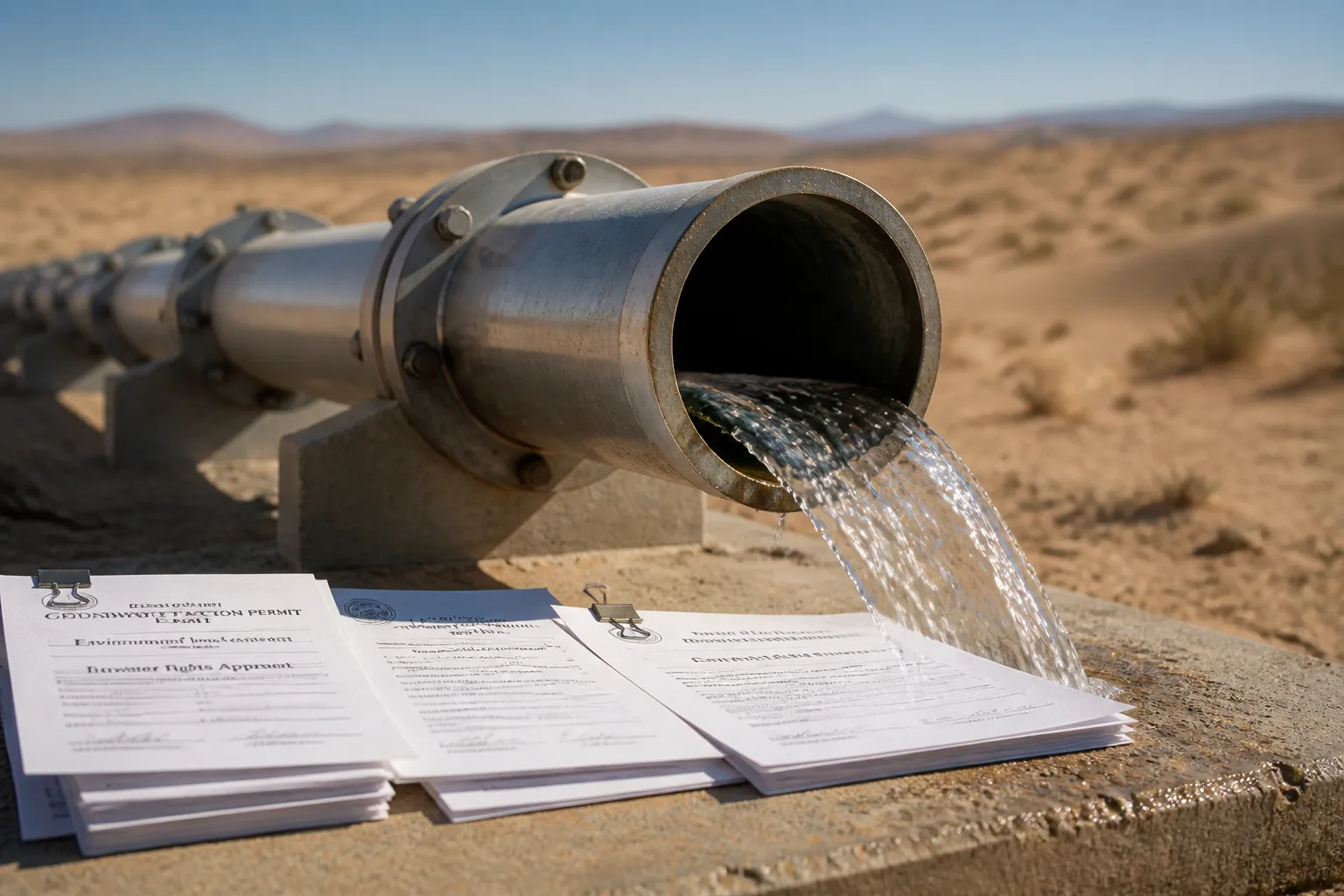
Cadiz Inc. Faces New Lawsuit Over Mojave Groundwater Pipeline After BLM Approval
In a move that has sparked a legal showdown, Los Angeles‑based water firm Cadiz Inc. is facing a lawsuit from environmental groups and Native American tribes over a 162‑mile groundwater pipeline approved by the Bureau of Land Management (BLM). The suit, filed last month in Los Angeles federal court, challenges the BLM’s July 9 decision that allows the repurposing of a former natural‑gas line for water transport.
The pipeline, dubbed the Mojave Groundwater Bank, has been in development for more than four decades. Cadiz first identified the aquifer in the early 1980s when satellite imagery revealed a large, isolated groundwater system near the Arizona border. Since then the company has cultivated about 3,500 acres of farmland on its property, using the aquifer to grow lemons, grapes, squash and other crops. Cadiz argues that pumping water from the aquifer prevents it from evaporating in the desert’s dry lakes.
According to Cadiz, the pipeline will be split into a Northern and a Southern route. The Northern route, acquired from the El Paso Natural Gas Company, will run northeast through Barstow to the Antelope Valley. Seventy percent of the Northern Pipeline’s capacity is earmarked for Inland area water providers, the Secure Water Alliance—a labor and business group—tells reporters. Cadiz also says the pipeline could keep more water in the Colorado River through exchange arrangements.
The BLM’s ruling concluded that the underground, 30‑inch steel pipeline would not significantly affect the environment. The pipeline crosses federally protected lands, including the Mojave Trails National Monument. Cadiz’s chief operating officer, Cathryn Rivera, said the bureau had reviewed the project for five years and that the record supports its decision.
Critics contend that the project would draw groundwater faster than it can be replenished, depleting springs that support wildlife such as bighorn sheep and desert tortoises. They also warn that lowering the water table would expose playa lakebeds, potentially releasing wind‑blown dust laden with toxic heavy metals. The lawsuit claims the pipeline would have a negative impact on the aquifer and surrounding ecosystems.
The suit was filed by a coalition of environmentalists and Native American tribes, including the Chemehuevi Indian Tribe. The tribe says the aquifer supports sacred springs and landscapes that are part of their cultural heritage. “Our people have been here since time immemorial, and we will not allow the Cadiz Corporation to destroy the living landscapes that preserve and teach our traditional ways,” said Daniel Silvas, chairman of the Chemehuevi Indian Tribe.
The project has a mixed record of support and opposition. In 2025, Lytton Rancheria of Northern California became a majority investor, making the Mojave Groundwater Bank the first major water infrastructure project that is majority owned by a Native American tribe. Cadiz spokesperson Courtney Deneger said the partnership would help preserve cultural sites.
Other critics include Representative Raul Ruiz, a Democrat from Palm Desert, who said the decision “ignores a fundamental truth: a private company should not be allowed to mine groundwater from one of the driest regions in North America without a full accounting of the consequences.”
Cadiz has highlighted economic benefits. The company estimates that construction of the Northern Pipeline would generate $386 million in economic activity, create 56 jobs, and produce $21 million in regional economic activity. Once operational, the pipeline would support 56 jobs, $21 million in regional economic activity and up to $3.4 million a year in state and local tax revenue.
The project’s legal and regulatory history has been uneven. The first Trump administration issued a pipeline permit, but the Biden administration reversed it in 2021. A 2019 California state law requires the project to obtain California State Lands Commission approval and undergo an independent scientific review. In 2024, the commission rejected a lease for a pipeline segment crossing state lands.
Experts say the project remains uncertain. Andrew Ayres, a water economics professor at the University of Nevada, said the project is “a hedge against future uncertainties” but that many projects “run into roadblocks further down the line that mean that either they’re not worth it or they’re just not feasible.”
The U.S. Department of the Interior’s new framework, released late last month, calls for cutbacks in Colorado River water deliveries to California and other states. Cadiz says the Mojave Groundwater Bank could provide new water that would directly benefit the diminishing Colorado River.
The lawsuit is the latest in a series of legal challenges that have kept the Mojave Groundwater Bank in limbo. The outcome will determine whether the 162‑mile pipeline can proceed, potentially adding a new source of water to California’s strained supply system.
The case is ongoing and additional court filings are expected as the parties prepare for trial.