
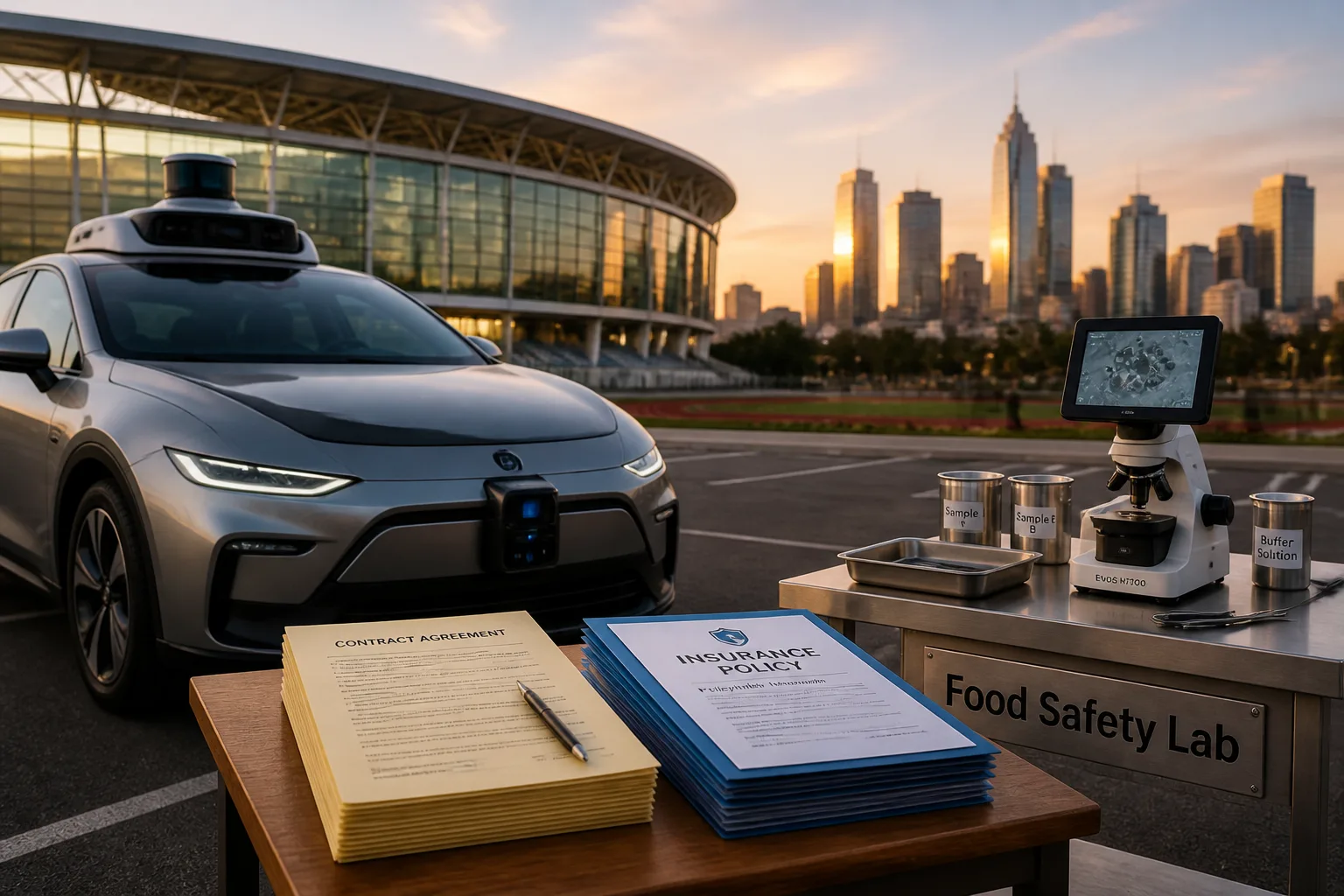
California Businesses Face New Challenges: Olympics Contracts, Foodborne Outbreak, Insurance Rates, and Waymo Dispute
California’s business landscape is rattled this week by a quartet of stories that touch everything from the glitter of the 2028 Summer Olympics to the hum of autonomous vehicles. Small‑business owners in the Greater Los Angeles area are being handed a new opportunity, a fast‑moving food‑safety scare is unfolding, drivers nationwide may see higher insurance costs, and a tech giant is squaring off with a city over charging rules.
LA28’s Path to 2028 program has opened its doors to small‑business enrollment through the end of 2026, offering a lifeline to those hoping to land a slice of the state’s biggest upcoming event. The organization announced that 75 % of Olympic‑related spending will stay within the Greater Los Angeles region, while 25 % is earmarked for small businesses. Participants receive certification assistance, networking events, and early access to bidding information, giving local firms a chance to compete for contracts tied to both the Olympics and the Super Bowl.
A week earlier, a different kind of headline broke out of the food‑service sector. Taco Bell has been linked to a cyclospora outbreak that began in July 2026. Public health officials identified the parasite in lettuce supplied by Taylor Farms, which was used in Taco Bell locations across nine states. According to a report from the California Department of Public Health, Taco Bell was aware of the contamination weeks before it issued a public warning. The company halted the distribution of the affected lettuce and has cooperated with the Centers for Disease Control and Prevention.
In the insurance arena, the California Court of Appeal upheld a state regulation on July 16, 2026 that allows auto‑insurance companies to charge unmarried drivers—single, divorced, or widowed—higher premiums than married drivers with identical vehicles. The court cited studies indicating that unmarried drivers are statistically more likely to file claims. The decision followed a 2‑to‑1 vote and confirms that insurers can continue to differentiate rates based on marital status, a ruling that may ripple across the nation.
Meanwhile, Waymo, Alphabet’s driverless‑car subsidiary, is embroiled in a legal dispute with the city of Santa Monica. The company has alleged that the city’s order to halt overnight charging at two local facilities has caused “sweeping, irrevocable harm” to its Southern California operations. Waymo’s lawsuit claims that the restriction limits its ability to deploy robotaxis in the region and threatens its expansion plans into other Southern California markets, including San Diego. The city counters that the order was necessary to address noise complaints and safety concerns.
These four stories illustrate the breadth of California’s business environment. The Olympic contract initiative reflects the state’s effort to keep the economic benefits of a global event local, while the Taco Bell outbreak underscores the ongoing need for food‑safety vigilance. The insurance ruling highlights how state policy can directly influence consumer costs, and the Waymo dispute shows the friction that can arise between technology firms and municipal regulations.
All four cases are currently active. LA28’s Path to 2028 program is open for small‑business enrollment through the end of 2026. Taco Bell has issued a recall of the affected lettuce and is cooperating with federal investigators. The insurance regulation remains in effect, and insurers are expected to continue applying the higher rates to unmarried drivers. Waymo’s lawsuit is pending in state court, and the city’s order remains in place.
California’s business community will watch these developments closely, as each has implications for local economies, public health, consumer costs, and the future of autonomous transportation.