
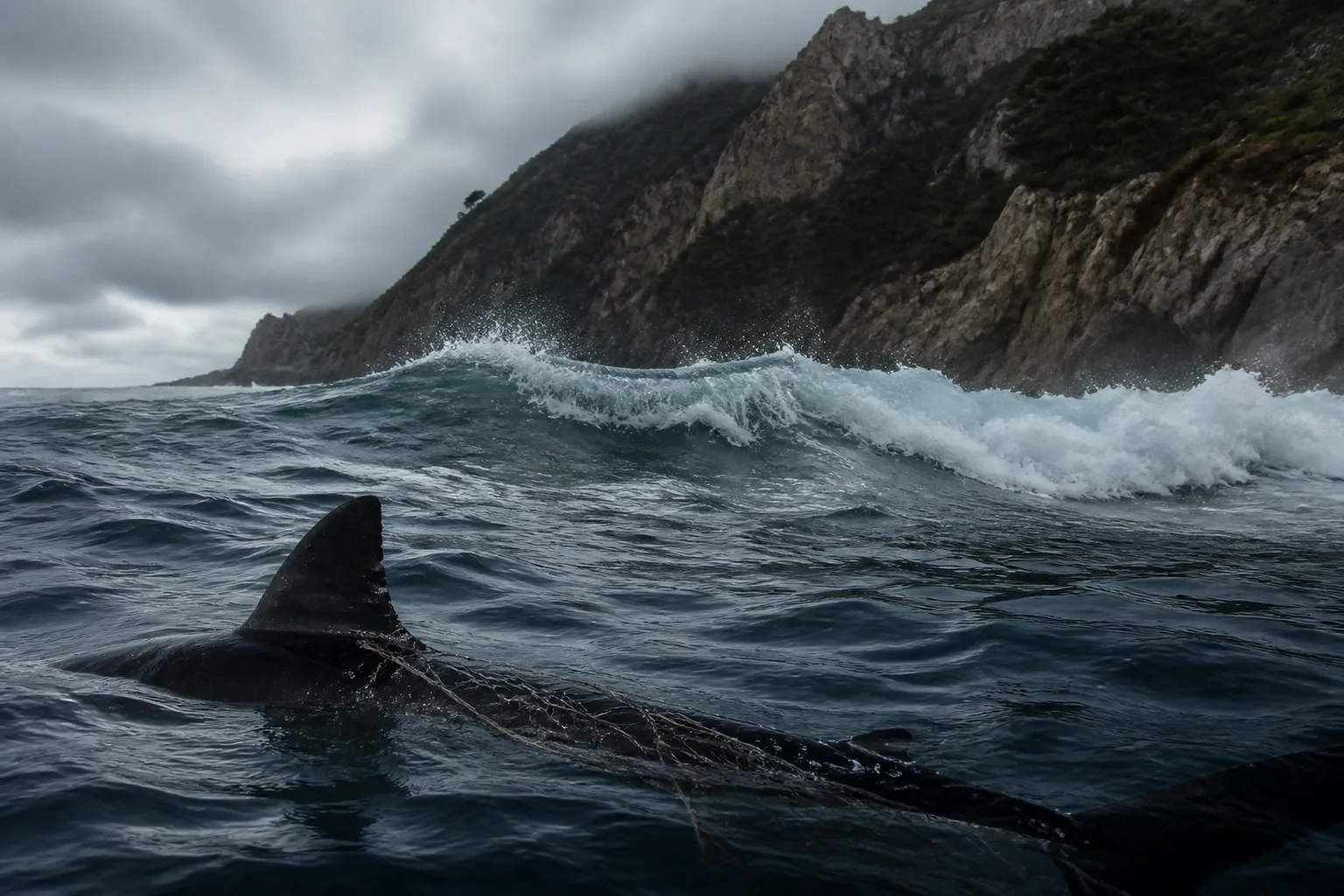
California Imposes Emergency Fishing Rules to Protect Great White Sharks Amid El Nino
California’s coast is facing a new threat as the 2026 El Niño brings warmer waters that could bring more great white sharks closer to shore. In response, the California Fish and Game Commission and the Department of Fish and Wildlife have adopted emergency regulations that will take effect on July 6, 2026. The rules prohibit the use of certain fishing gear—hooks larger than 1.5 inches, wire or metallic lines, and leaders—by recreational anglers within 1,000 yards of shore from Pigeon Point in San Mateo County to the Mexican border. The regulations aim to protect the federally protected great white shark and reduce the risk of dangerous encounters between hooked sharks and beachgoers.
El Niño has already shifted the preferred range of juvenile white sharks northward from Mexico, according to the California Department of Fish and Wildlife. The agency said warmer waters are keeping more sharks in California waters, increasing the likelihood of contact with people. Over the past century, Monterey County has recorded at least 14 unprovoked attacks and 19 encounters with great white sharks, the highest total in the state. Since 1950, California has documented fewer than 250 shark incidents, 17 of which were fatal—all involving white sharks. The most recent fatality occurred on December 21, 2025, when a shark killed a swimmer at Lovers Point in Monterey County.
The emergency regulations apply to any fishing activity from a beach, bank, pier, jetty, breakwater, dock, or other man‑made structure connected to land. By banning large hooks and metallic lines near shore, the state hopes to prevent anglers from hooking great white sharks and from attracting them with bait. The California Fish and Game Commission will file the rules with the secretary of state, and they will remain in effect for 180 days. If the regulations prove effective, the commission may pursue one or two 90‑day extensions in early January, according to spokesperson Krysten Kellum.
San Diego County has the highest number of shark encounters since 1952, with 27 incidents, followed by San Mateo and Santa Barbara counties, each with 21 encounters. Humboldt, Marin, and Monterey counties have 19 encounters each. These statistics underscore the broad geographic spread of shark activity along California’s coast. The new rules are designed to reduce the risk of dangerous encounters while also protecting the endangered apex predator. By limiting gear that can hook large sharks, the state seeks to keep both beach users and the species safer.
California’s emergency fishing regulations will take effect on July 6, 2026, and will remain in place for six months. The state will monitor shark encounters during this period to assess the impact of the restrictions. The regulations represent a proactive measure to address the increased presence of great white sharks linked to El Niño and to safeguard both public safety and marine biodiversity. As the state moves forward, officials will evaluate whether to extend the rules beyond the initial 180‑day period based on observed outcomes and continued monitoring of shark activity along the coast.